
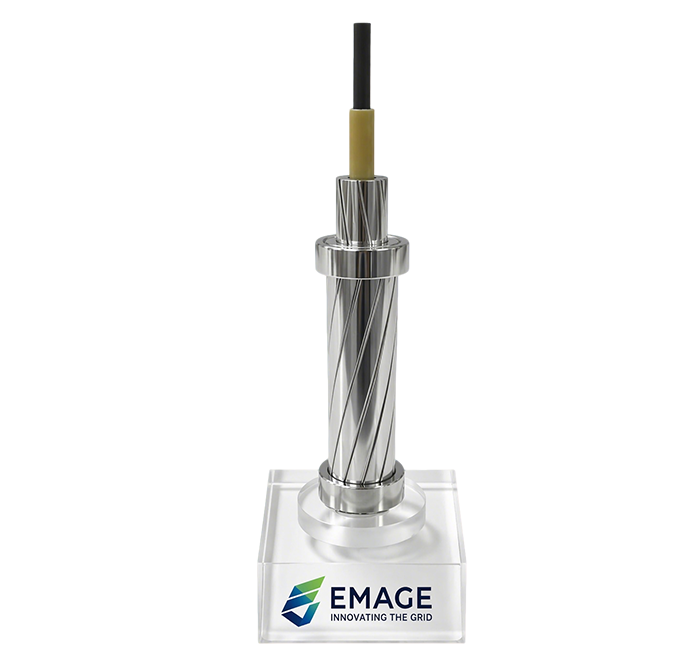
The coefficient of thermal expansion (CTE) is 20% of steel: greatly reducing sag, 70% lighter core mass per km than ACSR, tensile strength exceeds 2100 MPa, effectively resisting tensile deformation, can operate continuously at 180 °C, withstands up to 200 °C for brief periods.
Compared to Traditional Carbon-Fiber Conductors: Same MWA capacity, More cost efficient, Less rigid & fragile, Easier to install
Benifits:
● Reduced sag, resulting from the composite core's low coefficient of thermal expansion and relatively high stiffness.
● As increased aluminum content can be incorporated and the conductor can operate safely at higher temperatures within the same corridor constraints. The long term operation temperature can reach 180℃(vs 70℃ for ACSR), the current-carrying capacity is high increased.
● High mechanical strength, offering superior specific strength and stiffness compared with conventional steel-core conductors.
● Lower electrical losses and reduced upgrade costs, particularly for reconductoring existing lines without the need for major tower reinforcement or right-of-way expansion.
● Enhanced corrosion resistance and long-term reliability, provided the interfaces and protective systems are properly designed and engineered.
VS.Traditional Carbon-Fiber Conductors
-Same MWA capacity
-More cost efficient
-Less rigid & fragile
-Easier to install